Rewards That Motivate Kids (5–8): Small Wins Build Responsibility
- Jacob Volk
- Parenting , Habits , Rewards
- 02 Nov, 2025
If the toddler years were “Right Now, Please,” ages 5–8 are “Watch This!” Kids in this stage love to show what they can do — which makes it the perfect time to build daily responsibilities and healthy habits through small, consistent wins.
Used well, rewards at this age don’t buy behavior; they coach effort, celebrate progress, and help kids experience pride in their own follow-through. Here’s a practical, no-drama guide to putting that idea into motion tonight.
What works best for ages 5–8 (and why)
At this age, kids are:
- Hungry for independence (“I can do it myself!”)
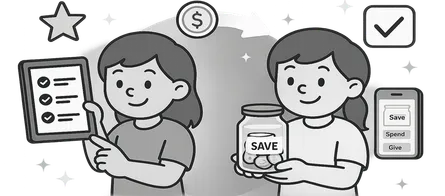
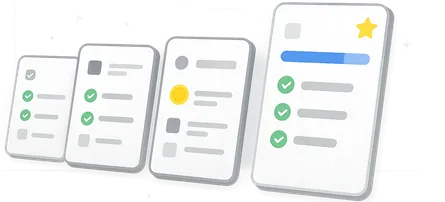
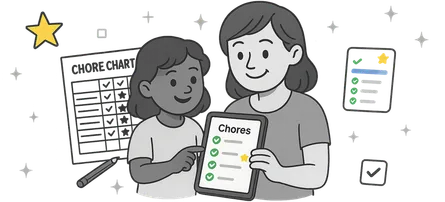
- Motivated by visible progress (stars, streaks, progress bars)
- Ready for small responsibilities they can complete in minutes
So your rewards should be:
- Predictable (same rules every day)
- Earned (effort → points → choice)
- Small but meaningful (privileges usually beat “stuff”)
💡 Mindset shift: You’re not paying for chores — you’re rewarding effort, follow-through, and teamwork.
Principles that keep it smooth
-
Reward the process, not just the result
Call out how they tried: “You stayed focused for five minutes!” Effort builds grit — and grit builds confidence. -
Make it visual
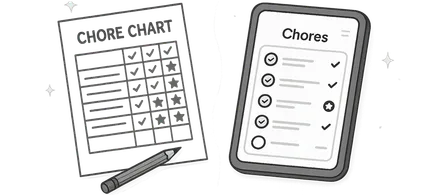
Points, stars, and streaks help kids see their progress. Visual feedback equals built-in motivation. -
Keep goals bite-sized
Two- to five-minute tasks win. Momentum matters more than scale. -
Let them choose
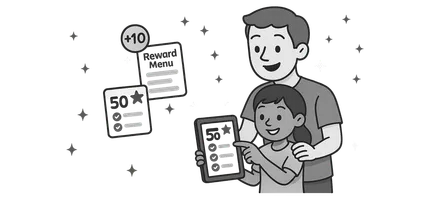
A simple Reward Menu gives kids agency and reduces negotiations. -
Be consistent
Same rules, same feedback. Predictability keeps everyone calm.
Reward menu ideas (no shopping required)
Free privileges
- Pick the family playlist during cleanup
- Choose the game for 10 minutes
- Swap a chore with a sibling (once per week)
- Extra bedtime story
- Pick the cereal tomorrow
Experiences & connection
- Parent “date coupon” (15 minutes one-on-one time)
- Make the snack together
- Build a blanket fort for reading
- Backyard flashlight walk after dinner
Smart reward ideas
Kids’ Bluetooth Headphones (Volume-Limited)
Great for audiobooks, quiet time, or earning a longer screen-time session without blasting the volume.
Shop on AmazonSTEM Building Kit
A small science or engineering kit they can earn for consistent routines.
Shop on AmazonCozy Reading Light or Headlamp
Perfect for ‘stay up 20 extra minutes to read in bed’ privileges.
Shop on AmazonBitzee - Digital Pet
A virtual pet that rewards consistent care and attention.
Shop on AmazonAffiliate Disclosure: As an Amazon Associate, we earn from qualifying purchases.
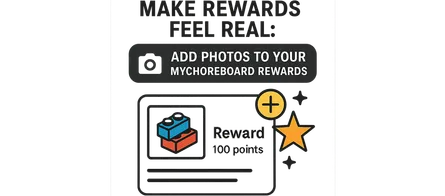
Make rewards feel real.
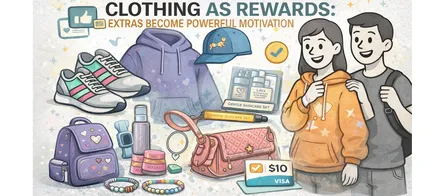
With MyChoreBoard’s Add Image to Reward feature, you can upload photos of specific rewards — so they see exactly what they’re working toward, from room lights to earbuds or a gift card. 👉 ADD IMAGES TO CUSTOM REWARDS
What tasks to reward at this age
Keep targets specific and finishable:
- Morning: Make bed (quick tidy), pack lunchbox, put clothes in hamper
- After school: Hang backpack, snack plate to sink, five-minute room pick-up
- Evening: Brush teeth, lay out tomorrow’s outfit, read for 10 minutes
- Family teamwork: Set table, feed pet, water plant, wipe a surface
Points & thresholds that feel fair
- 1–2 points per micro-task (2–5 minutes)
- 3–5 points for “big kid” jobs (10–15 minutes, e.g., help cook dinner)
- 6–8 points → pick a privilege from the menu
- 20–30 points → a weekly reward (movie night choice, breakfast picnic)
⚖️ Keep thresholds reachable daily. Short feedback loops beat far-off “someday” prizes.
How to set it up in MyChoreBoard (5–8 friendly)
- Create short, clear tasks with icons kids recognize
- Turn on instant points + celebratory feedback
- Add a Reward Menu as custom rewards with small point costs
- Show the streak at day’s end (confidence fuel!)
- Include one weekly reward to reinforce consistency, not perfection
7-day starter plan (copy this)
Day 1–2: Pick three micro-tasks. Award 2 points each. Immediate praise.
Day 3: Introduce the Reward Menu (6 points → one pick).
Day 4: Add one “big kid” job (5 points).
Day 5: Show their streak and name the effort (“You kept trying even when it was boring!”).
Day 6: Let them choose which task to do first (ownership = buy-in).
Day 7: Offer a weekly reward for reaching 25+ points (movie choice or game-night pick).
Common challenges (and quick fixes)
-
“They only want the reward.”
Totally normal at first. Keep rewards small and consistent; shift praise toward effort they control. -
“They rush and miss steps.”
Break tasks into checkbox steps and award points only when all are complete. -
“They negotiate every time.”
Use the Reward Menu. “Points unlock choices; the menu is the menu.” -
“They forget the system.”
Place the device or chart where routines start. End each day with a 15-second “score reveal.”
This post is part of our “Positive Reinforcement by Age” series
Helping parents use motivation science to build consistency, confidence, and real responsibility — one stage at a time. Explore the full series:
- 🧸 Age-Appropriate Rewards for Toddlers (2–4)
- 🎒 Rewards That Motivate Elementary-Age Kids (5–8)
- 🧭 Reward Systems for Tweens (9–12)
- 🎧 Motivating Teens Without Bribes (13–17)
- ⚡ Reward Systems That Motivate ADHD Kids
➡️ Learn more about the psychology behind rewards in our hero guide: How Positive Reinforcement Builds Motivation & Responsibility in Kids.
FAQs
- No. Bribes are last-minute deals. A planned, consistent system tied to effort teaches responsibility and keeps routines calm.
- Small, predictable privileges and visible progress — like choosing a song, extra story time, or a weekly movie pick — beat big prizes.
- Try 2 points for micro-tasks (2–5 minutes) and 5 points for bigger jobs (10–15 minutes). Keep thresholds reachable daily so feedback stays fast.

Ready to try MyChoreBoard with your kids?
Install on any phone, tablet or computer. Free with no sign-in hoops.
Get Started Now