How Positive Reinforcement Builds Motivation & Responsibility in Kids
- Jacob Volk
- Rewards & Motivation
- 25 Oct, 2025
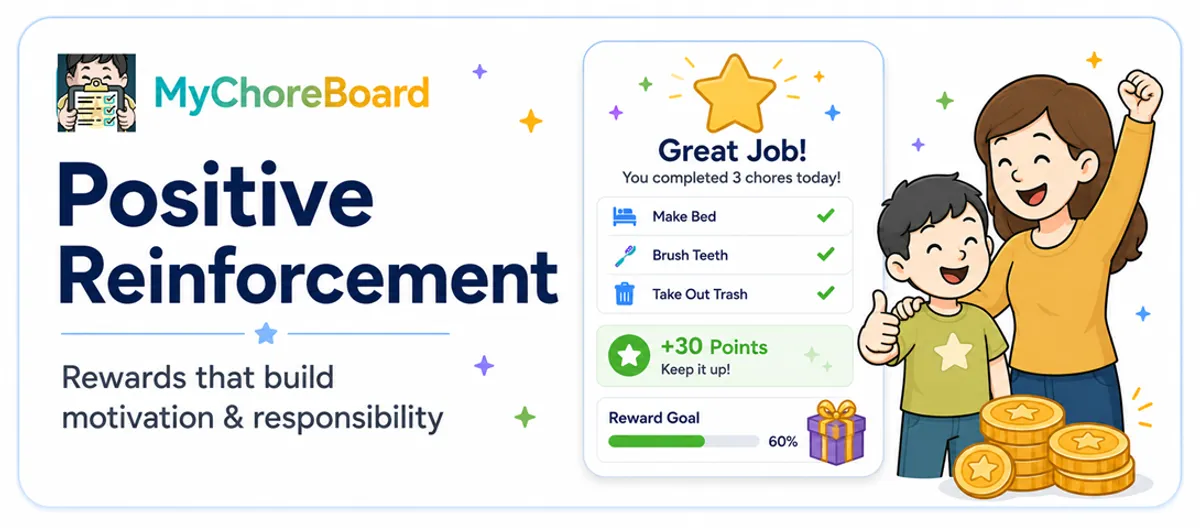
Parents don’t need more nagging power. They need a motivation system that kids actually respond to. That’s what positive reinforcement delivers: clear expectations, instant feedback, and meaningful rewards that help effort turn into pride and responsibility.
Why rewards work — the psychology behind motivation
Kids are wired to seek feedback and recognition. When they experience success, their brains release dopamine, which reinforces the behavior loop (cue → action → reward → do it again).
Research consistently finds that giving positive reinforcement by rewarding desirable behavior right after it happens increases the likelihood it’ll happen again (SAGE Journals, 2020). In one study, children given small, consistent rewards developed stronger proactive control strategies, and they got better at anticipating and planning tasks (PMC, 2020).
Not all rewards are equal. A meta-analysis of 128 studies found that “expected, tangible” rewards can dampen intrinsic motivation if overused, but when rewards are tied to effort and mastery, they actually support learning and persistence (PubMed, 1999).
Parent takeaway: Use rewards to highlight effort and follow-through, not just outcomes. You’re reinforcing the process, not buying compliance.
Rewards vs. bribes — the key difference
| Rewards | Bribes |
|---|---|
| Planned and consistent | Last-minute deal to stop behavior |
| Reinforce effort & progress | Buy short-term compliance |
| Build confidence & habits | Undermine self-control |
| Fade naturally over time | Create dependency |
Rewards live inside a predictable system. Bribes show up after a conflict. (We’ve all been there: “If you put on shoes, I’ll give you a cookie!”) Consistent, predictable rewards improve learning; random/reactive ones cause confusion (ResearchGate, 2023).
Timing matters (and science agrees)
If you promise a five-year-old a reward “next week,” you already know how that story ends. Immediate rewards are more motivating and can even increase intrinsic motivation when timed well (PMC, 2022).
That’s why instant feedback, like seeing points or stars appear the moment a chore is done, works wonders. It closes the dopamine loop and helps form habits faster.
If you are building the whole routine from scratch, see how rewards fit into a chore chart for kids.
Join MyChoreBoard — the free chore app built around positive reinforcement
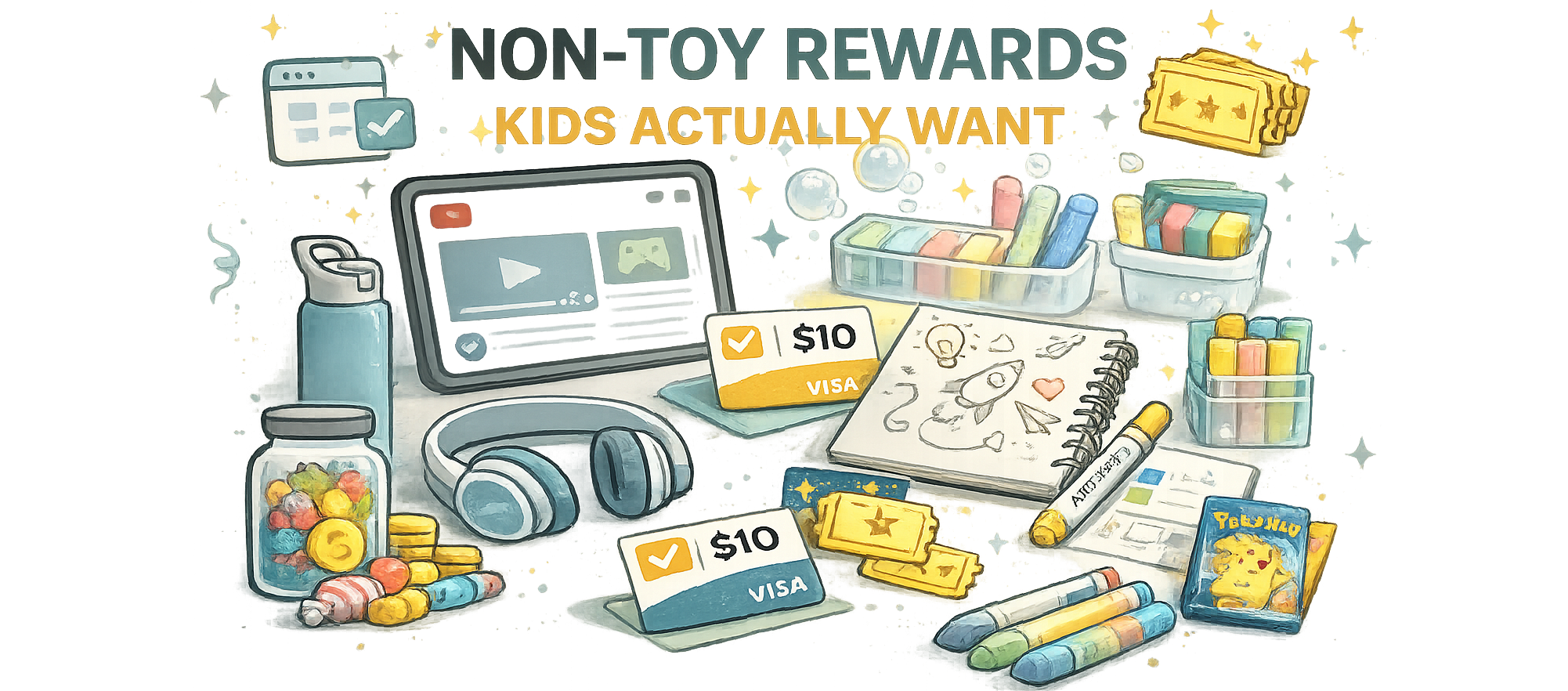
Non-Toy Rewards: Motivation Without the Clutter
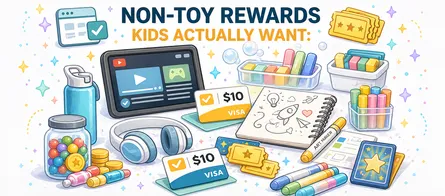
Not all rewards need to come in a box. In fact, many families find that non-toy rewards are more effective over time because they don’t add clutter or lose their appeal as quickly. Privileges, experiences, screen time, choosing dinner, or staying up a little later can all be powerful motivators when they’re clearly earned. These rewards feel meaningful because they’re tied to autonomy and choice, not just stuff.
If you’re looking for ideas that motivate without filling shelves and bins, see our full guide to non-toy rewards for kids.
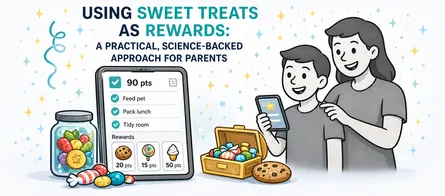
Food and Sweet Treat Rewards (Used Intentionally)
Food rewards often make parents uncomfortable, but when used intentionally, small sweet treats can work well within a structured reward system. The key is keeping them predictable, portion-controlled, and clearly earned rather than impulsive or emotional. When treats are framed as occasional rewards instead of constant incentives, they tend to stay motivating without creating power struggles.
For guidance on how to use food rewards responsibly and effectively, read our breakdown of sweet treats as rewards.
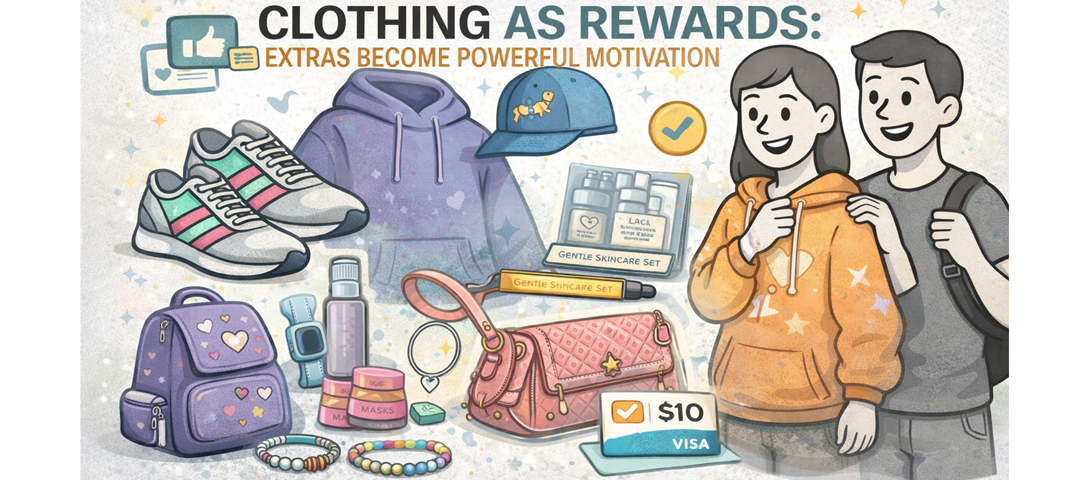
Clothing and Personal Choice as Rewards
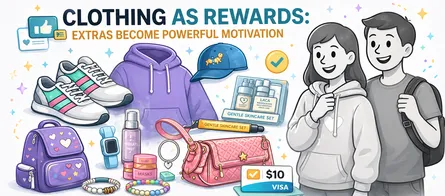
As kids get older, rewards tied to personal identity and choice often become more motivating than toys or treats. Clothing, accessories, and style-related items work especially well for tweens and teens because they represent independence rather than novelty. When framed as something earned, not expected, these rewards can reinforce responsibility while respecting a child’s growing autonomy.
If you’re rewarding older kids, our guide to clothing as rewards explores when this approach works best and how to use it without pressure.
Age-appropriate reward strategies
Different ages = different motivators. What thrills a toddler will earn an eye-roll from a teen. Tailor your approach:
Toddlers (2–4): Simple and instant joy
- Stickers, cheers, and high-fives
- Sweet Treats when used properly
- Keep rewards immediate and visual
- Focus on warm praise: “You did it!”
Explore: Age-Appropriate Rewards for Toddlers (2–4)
Early School Age (5–8): Building responsibility
- Sticker charts or small privileges
- Trade stars for choice: extra story, playlist pick, or choosing dessert
- Reinforce consistency over perfection
Explore: Rewards That Motivate Elementary-Age Kids
Tweens (9–12): Encouraging ownership
- Experience-based rewards like movie night or choosing dinner
- Points toward bigger goals, such as saving for a bike
- Visual progress tracking for accountability
Explore: Reward Systems for Tweens (9–12)
Teens (13–17): From rewards to goals
- Autonomy is the new currency
- Tie effort to privileges & trust, such as curfew, car, or screens
- Shift from tangible prizes to recognition and freedom
Explore: Motivating Teens Without Bribes (13–17)
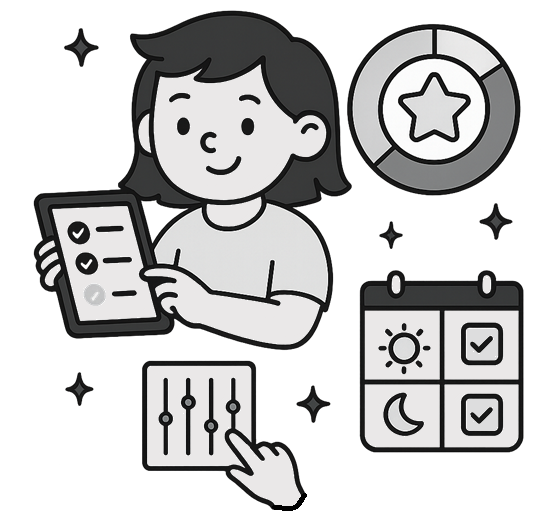
The habits rewards help build
Rewards teach habit loops — cue → action → reward → repeat. Consistent perceived reward strengthens habit formation and automaticity over time (BMC Psychology, 2018).
Here’s what that means for parents:
- Responsibility: Connect effort with outcomes
- Consistency: Repetition becomes second nature
- Confidence: Visible progress builds pride
- Self-control: Kids start choosing good habits on their own
Over time, external rewards fade and are replaced by internal satisfaction. Think of it like taking off training wheels.
How MyChoreBoard puts positive reinforcement into action
MyChoreBoard was built around a simple idea: motivation should feel natural, not forced. The app gives parents a practical way to administer positive reinforcement without turning chores into constant negotiation.
The best way to use MyChoreBoard is to make the system clear before the work starts: kids should know what needs to be done, what each task is worth, and what they can work toward. That keeps rewards proactive instead of reactive, which is the difference between a healthy reinforcement system and a last-minute bribe.
1. Start with clear, specific chores
Positive reinforcement works best when kids know exactly what behavior is being reinforced. Instead of broad instructions like “help around the house,” use specific tasks such as “make your bed,” “feed the dog,” or “put laundry in the hamper.”
In MyChoreBoard, parents can assign age-appropriate chores, organize them by time of day, and keep the daily routine visual. That makes the expectation easier for kids to understand and easier for parents to reinforce consistently.
2. Use points as immediate feedback
When a child completes a task in MyChoreBoard, they immediately see progress. That quick feedback matters because it connects the effort with the reward loop while the behavior is still fresh.
Points do not have to be huge to be motivating. The goal is not to make every chore feel like a transaction. The goal is to make effort visible, so kids can see that small actions add up.
3. Build a reward menu your child actually cares about
A strong reward system gives kids something meaningful to work toward. In MyChoreBoard, parents can create custom rewards that fit their family, including privileges, experiences, small treats, bigger goals, or allowance-style rewards.
Try to keep a healthy mix. A reward menu might include things like choosing dinner, extra reading time, a movie night, a small toy, a special outing, or saving toward a bigger item. This keeps motivation fresh without relying only on buying more stuff.
4. Keep bigger rewards visible with Savings Goals, images, and links
For bigger or more specific rewards, the more concrete the goal is, the easier it is for kids to stay motivated. MyChoreBoard lets parents add reward images so kids can see the exact item, experience, or privilege they are working toward.
Parents can also enable Savings Goals for a child. The child chooses one existing reward, and its image and progress remain visible near the top of the Tasks screen while chores are completed. This closes the gap between the work a child is doing now and the reward they are saving toward.
If the reward is a specific product, parents can also save an Amazon link directly on the reward. That keeps the reward connected to the actual item and makes fulfillment easier later, while parents still stay fully in control of purchasing and approval.
Explore the setup guides: Use Savings Goals and the new child interface, add photos to MyChoreBoard rewards, and add Amazon links to specific rewards.
5. Fulfill rewards with recognition, not just a transaction
When your child redeems a reward, use that moment to name the behavior you want to see again: “You kept up with your morning routine all week,” or “You earned this by feeding the dog without being reminded.”
That praise is important. MyChoreBoard tracks the points and rewards, but the parent connection is what helps kids turn success into pride.
6. Fade rewards as responsibility grows
As habits become more automatic, you can slowly shift the focus from external rewards to ownership. Keep points and rewards available, but also celebrate consistency, independence, and trust.
Over time, the goal is for kids to move from “What do I get?” to “I know what I’m responsible for.” That’s not bribery. That’s behavior science in action.
Join MyChoreBoard — the free chore app built around positive reinforcement
Positive reinforcement for ADHD & neurodivergent kids
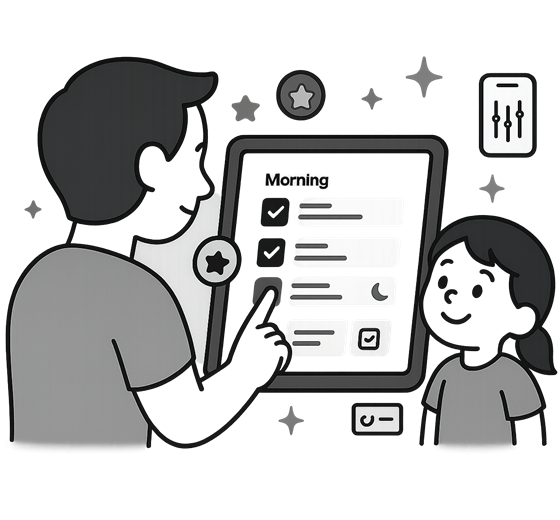
For kids with ADHD or executive-function challenges, instant visual feedback is even more important.
Their brains crave short feedback loops and quick wins that keep motivation alive.
That’s why MyChoreBoard’s digital chore chart uses:
- Bright visual progress markers
- Instant points and celebrations
- Predictable routines that build consistency
Visual systems like this help kids stay engaged and remember what comes next, turning effort into a rewarding loop they can actually feel good about.
Explore next: Reward Systems That Motivate ADHD Kids
Tips for using rewards effectively
- Start small and specific. Focus on one or two clear goals.
- Reward effort, not perfection. Reinforce persistence and trying.
- Stay consistent. Predictability builds trust; randomness confuses.
- Fade slowly. As habits form, replace prizes with praise.
- Make it visual. Charts, stars, and progress bars make success concrete.
- Pair with connection. Rewards work best alongside warm encouragement.
Common pitfalls to avoid
- ❌ Over-rewarding: Too many prizes dilute meaning.
- ❌ Changing rules mid-stream: Kids need predictable systems.
- ❌ Withholding praise: Rewards should add to encouragement, not replace it.
- ❌ Only “stuff” rewards: Time together and privileges often beat toys.
An overemphasis on tangible rewards can reduce prosocial behavior, like sharing, in young children (Child Development, 2016). Balance is key.
FAQs
- Yes. Studies show that consistent positive reinforcement strengthens motivation and self-control in kids. Over time, external rewards lead to internal satisfaction and pride in a job well done.
- Match rewards to age and personality. Younger kids respond to immediate, visible rewards like stickers or stars, while older kids prefer privileges, autonomy, or experiences.
- Plan rewards ahead of time and connect them to effort, not compliance. Bribes are reactive. Rewards are proactive and consistent.
- Start with clear chores, assign realistic point values, give kids instant visual feedback, and create rewards they care about. For bigger rewards, use Savings Goals, images, and saved product links so kids can see exactly what they are working toward.
- Fade them gradually once habits stick. As your child begins to feel pride and ownership, you can replace external rewards with praise, autonomy, or goal-setting.
Ready to try MyChoreBoard with your kids?
Install on any phone, tablet or computer. Free with no sign-in hoops.