Motivating Tweens: Build Independence Without Power Struggles
- Jacob Volk
- Parenting , Habits , Rewards
- 07 Nov, 2025
If ages 5–8 were “Watch this!”, the tween years (9–12) are “Let me choose.” Tweens crave a voice in how things happen — which is perfect, because voice and choice are exactly what make rewards work at this stage.
Used well, rewards aren’t bribes; they’re training wheels for independence. With the right structure, you can give tweens ownership, reinforce reliability, and eliminate power struggles — all while helping them feel capable and trusted.
What works best for ages 9–12 (and why)
Tweens are:
- Hungry for autonomy (“I’ve got this.”)
- Motivated by progress toward bigger goals (not just small prizes)
- Ready for responsibility with visible impact (helping the family)
So your rewards should be:
- Experience- and privilege-based (less “stuff,” more freedom)
- Choice-rich (a menu, not a mandate)
- Transparent and consistent (no surprise rule changes)
💡 Mindset shift: You’re moving from “Do it because I said so” → “Do it because you’re capable and trusted.” > >
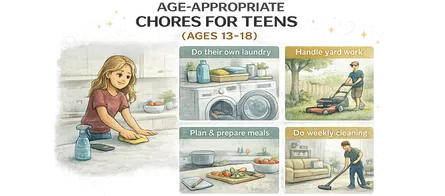
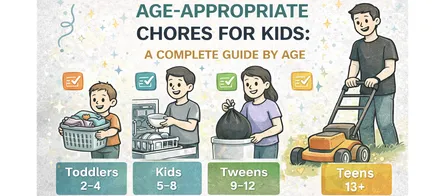
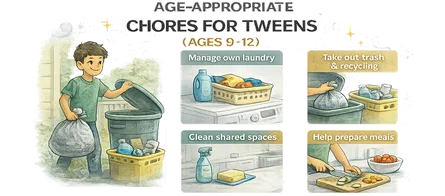
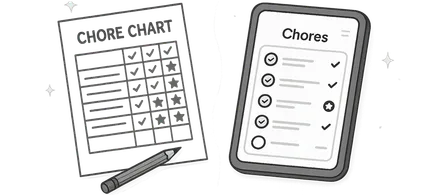
Rewards tend to work best when they are paired with clear, age-appropriate chores for tweens, rather than used in isolation.
Principles that keep it smooth
-
Co-create the plan
Ask what they want to work toward. Ownership early prevents haggling later. -
Show the math
Points → thresholds → choices. Post it where they can see it. Fair = motivating. -
Reward reliability, not just results
Call out initiative, follow-through, and consistency — the foundation of real responsibility. -
Let them spend (or save) points
Savings goals teach patience and planning; quick redemptions keep it engaging. -
Review weekly
Quick check-in: what worked, what didn’t, and what they’re proud of.
Reward ideas (tween edition)
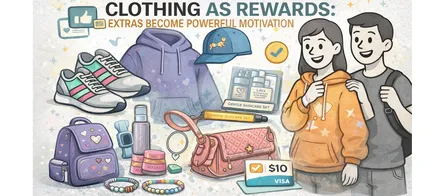
Tweens are motivated by fun upgrades, small independence boosts, and personalized gear. At this age, rewards work best when they feel like earned privileges rather than toys. Offer these as choices they can work toward over time.
Privileges (the real currency)
- 30 minutes of later bedtime (Fri/Sat)
- Extra device time (within limits)
- Choose dinner or playlist control
- Invite a friend over for 1–2 hours
- Swap a chore once per week
Experiences & mastery
- Pick a weekend activity (bike trail, park, or library haul)
- Learn something new (baking, coding, sketching, DIY project)
- Mini project budget (small amount for supplies or creative materials)
Light tangible rewards
Bluetooth Speaker (Kid-Friendly Size)
Perfect for music, audiobooks, or making their room feel a little more ‘their own.’
Shop on AmazonJournaling or Sketch Kit
A creative outlet that feels more grown-up and gives them a place to express themselves.
Shop on AmazonDesk or Room Decor Upgrade
A cool LED desk lamp, organizer, or small decor piece they can ‘earn’ to personalize their space.
Shop on AmazonFidget / Focus Gadget
A high-quality cube, ring, or mechanical fidget — great for school focus and fun to earn.
Shop on AmazonAffiliate Disclosure: As an Amazon Associate, we earn from qualifying purchases.
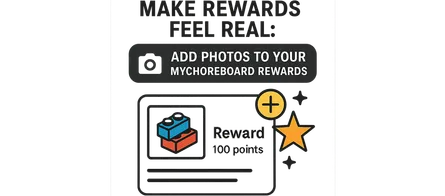
Make rewards feel real.
With MyChoreBoard’s Add Image to Reward feature, you can upload photos of any reward — giving tweens a clear, visual goal that keeps them engaged and motivated. 👉 ADD IMAGES TO CUSTOM REWARDS
What tasks to reward at this age
Focus on reliability and initiative, not perfection:
- School: Pack backpack the night before, 10-minute reading block, review tomorrow’s plan
- Home: Dishes, vacuum one room, feed pet, laundry start/transfer
- Life skills: Make breakfast, water plants, tidy desk, plan outfit
- Initiative: Start without reminders, help a sibling, tidy common area
Points & thresholds that feel fair
- 2–3 points: Routine tasks (5–10 minutes)
- 4–6 points: Higher-effort tasks (10–20 minutes)
- 8–10 points: Project or skill-based tasks (20–40 minutes)
Redeem ideas:
- 12–15 points → small privilege (choose dessert, playlist control)
- 25–30 points → mid-tier privilege (later bedtime, extra device block)
- 60–80 points → big reward (friend hangout, weekend activity pick)
⚖️ Keep feedback loops short. Daily redemptions keep motivation alive; weekly rewards reinforce long-term consistency.
How to set it up in MyChoreBoard (9–12 friendly)
- Create clear tasks with fair point values
- Add a Reward Menu with privileges and experiences
- Turn on instant feedback so effort feels visible
- Display the weekly total to encourage goal tracking
- End the week with a quick review + reset ritual
7-day starter plan (copy this)
Day 1: Co-create the reward menu (6–10 items).
Day 2: Assign 3 core tasks + 1 stretch task.
Day 3: Add an initiative bonus (+2) for starting without reminders.
Day 4: Midweek check-in — what’s working? Adjust points if needed.
Day 5: Offer a choice: save points or redeem a small privilege.
Day 6: Encourage a project task (learn, cook, build) worth 8–10 points.
Day 7: Review the week, praise reliability, and redeem one big reward if earned.
Common challenges (and easy fixes)
-
“They negotiate constantly.”
Point to the written menu. Changes happen at the weekly review, not midweek. -
“They rush and do it poorly.”
Add quality checks — a photo, parent glance, or quick review step. -
“They only pick screen time.”
Price device time higher and mix in experiences or creative projects. -
“They lose steam.”
Add a midweek challenge worth 5–8 points to re-engage them.
This post is part of our “Positive Reinforcement by Age” series
Helping parents use motivation science to build consistency, confidence, and real responsibility — one stage at a time. Explore the full series:
- 🧸 Age-Appropriate Rewards for Toddlers (2–4)
- 🎒 Rewards That Motivate Elementary-Age Kids (5–8)
- 🧭 Reward Systems for Tweens (9–12)
- 🎧 Motivating Teens Without Bribes (13–17)
- ⚡ Reward Systems That Motivate ADHD Kids
➡️ Learn more about the psychology behind rewards in our hero guide: How Positive Reinforcement Builds Motivation & Responsibility in Kids.
FAQs
- Yes. Value tasks by time and effort, not identical numbers. Fair ≠ equal — it’s about matching capability.
- That’s strategy! Tighten rules, price overused rewards higher, and reward quality and initiative, not loopholes.
- No. Keep some family tasks as “just what we do.” Reward effort on stretch goals, initiative, and consistency.

Ready to try MyChoreBoard with your kids?
Install on any phone, tablet or computer. Free with no sign-in hoops.
Get Started Now